(CASTELLANO)
Una mole rota dentro de una película que parece más barata de lo que es
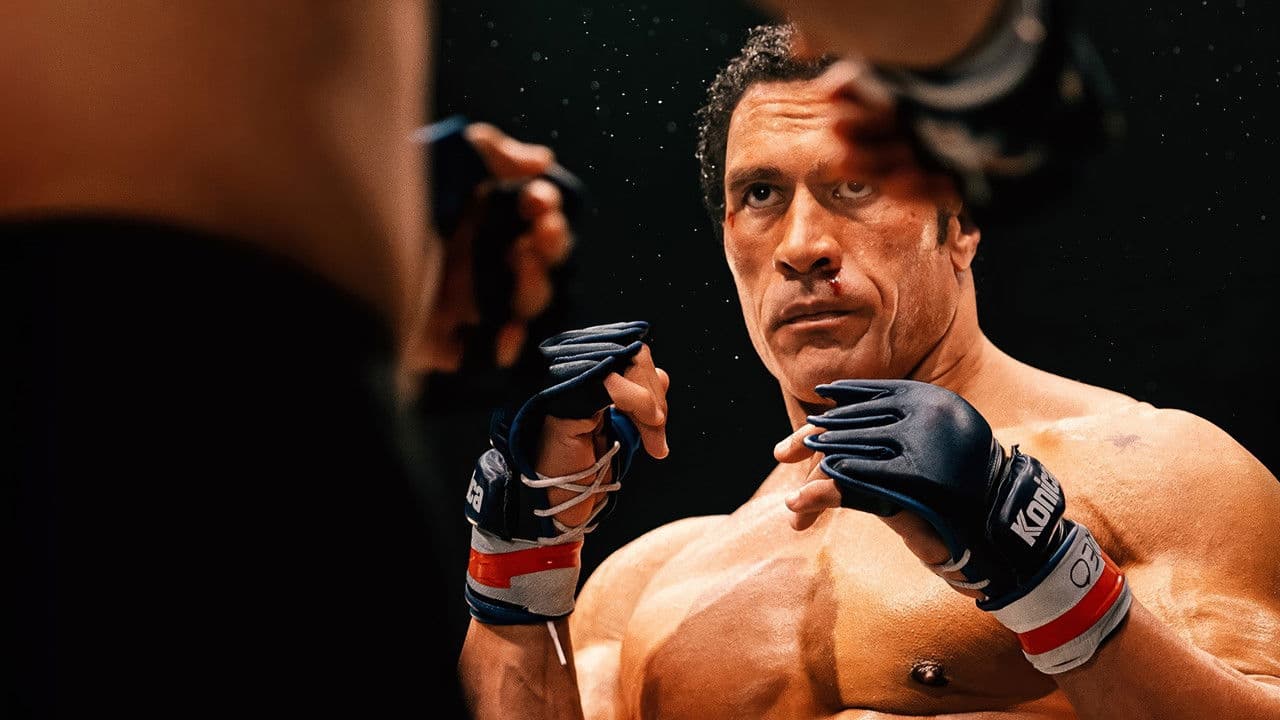
Me interesó más por Mark Kerr y por Dwayne Johnson que por la película en sí. Lo primero que llama la atención es evidente: Johnson está irreconocible. No solo por la caracterización, el pelo o el rostro, sino porque por momentos consigue borrar bastante bien la imagen de "The Rock". Aquí no está haciendo de estrella invencible, sino de un hombre enorme por fuera y bastante hundido por dentro.
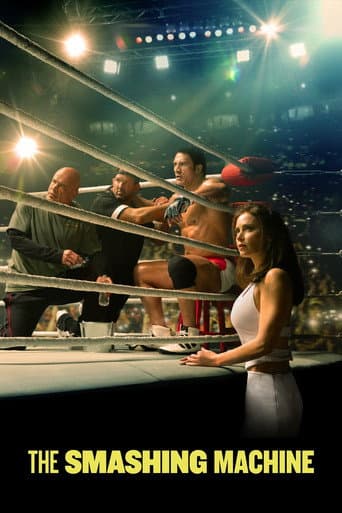
La película acierta cuando se queda cerca de esa contradicción. Mark Kerr puede parecer una máquina de destrozar rivales, pero fuera del ring transmite cansancio, dependencia, inseguridad y una fragilidad que no encaja con el cuerpo que vemos. Ahí es donde más funciona: cuando muestra a un tipo construido para aguantar golpes que no sabe muy bien qué hacer con los golpes que vienen de dentro.
Johnson está, seguramente, en el papel más serio y más trabajado de su carrera. Me sorprendió para bien. Hay una contención rara en él, una forma de mirar que intenta no vender heroicidad. Lo mejor de su trabajo está en los momentos en los que parece perdido, apagado, como si el campeón no supiera dónde dejar todo lo que le duele.
La relación con Dawn me resultó agotadora. Ella me pareció insoportable durante buena parte de la película, aunque entiendo que la intención no sea presentarla como "la mala" sin más. Emily Blunt está bien, pero la dinámica entre ellos es tan tóxica, repetitiva y áspera que por momentos cansa. En casa no hay descanso para Mark: hay otra pelea, otra presión, otro sitio donde tampoco sabe respirar.
Ahí la película sí consigue algo incómodo: el ring casi parece más sencillo que la vida privada. En el combate hay reglas, dolor físico y un resultado. En la relación hay dependencia, reproches, adicción, miedo, ego y dos personas haciéndose daño sin saber salir del círculo. La idea está ahí y tiene fuerza.
Mi gran problema es la forma. Esa estética de documental barato de los noventa, con grano, cámara sucia y luz feísta, me tiró bastante para atrás. Entiendo lo que busca Benny Safdie: autenticidad, época, aspereza, sensación de estar pegado a un mundo deportivo aún poco pulido. Pero una cosa es parecer real y otra parecer cutre. A mí muchas veces me pasó lo segundo.
Esa elección visual hace que la película parezca más pobre de lo que probablemente es. Hay momentos en los que Johnson está haciendo un trabajo muy serio, y la imagen parece empeñada en quitarle valor cinematográfico. No siempre sentí crudeza; a veces sentí feísmo impostado. Como si la película estuviera demasiado preocupada por parecer un documental VHS de la época y no tanto por encontrar una belleza propia.
La música tampoco me convenció. Tiene ese aire de pegote noventero, de banda sonora puesta para fabricar época más que para expresar algo verdadero. No me llegaba al dolor interior de Kerr. Por eso pensaba todo el rato en lo bien que le habría sentado algo como "Nutshell", de Alice in Chains: tristeza seca, derrota íntima, cansancio y derrumbe por dentro. Una escena silenciosa con Mark solo y esa canción habría sido bestial.
La película parece querer huir del biopic deportivo convencional, y eso tiene valor. No busca la épica fácil, ni la gran remontada, ni el combate filmado como triunfo glorioso. Su camino es más apagado, más anti-Rocky, más centrado en el desgaste. Pero a veces, intentando evitar los clichés, se queda sin una emoción suficientemente fuerte. No todo lo seco es profundo; a veces solo es distante.
La derrota ante Fujita funciona como final narrativo porque desmonta al invencible. No es solo perder una pelea: es perder una identidad. Si te han construido como una máquina, el día que la máquina falla ya no sabes qué queda debajo. Ese tramo tiene sentido, aunque la película no siempre me llevó hasta ahí con toda la fuerza que podía haber tenido.
Lo que sí me gustó mucho fue el cierre con el verdadero Mark Kerr haciendo la compra. Me parece una imagen sencilla y muy bonita, porque rompe con toda la mitología anterior. Después de verlo como campeón, adicto, cuerpo enorme, icono de un deporte brutal y hombre perdido, terminar con él en una situación cotidiana lo devuelve a algo más humano: la vida sigue, incluso después de que el mito se haya roto.
Al final, me queda como una película interesante, irregular y más valiosa por su protagonista que por su forma. Dwayne Johnson sorprende de verdad y Mark Kerr es un personaje con mucho peso, pero la estética de falso documental barato y la música me alejaron bastante. Me interesó el hombre más que el estilo. Tiene momentos potentes, un final humano y una interpretación que merece respeto, pero no me parece una obra redonda.
(ENGLISH)
A broken giant inside a film that looks cheaper than it is
I was more interested in Mark Kerr and Dwayne Johnson than in the film itself. The first thing that stands out is obvious: Johnson is unrecognizable. Not only because of the makeup, the hair or the face, but because at times he manages to erase the image of "The Rock" quite well. Here he is not playing an invincible star, but a man who is enormous on the outside and quite broken inside.
The film works best when it stays close to that contradiction. Mark Kerr may look like a machine built to destroy opponents, but outside the ring he conveys exhaustion, dependence, insecurity and a fragility that does not match the body we see. That is where it functions most strongly: when it shows a man built to take blows who does not really know what to do with the blows that come from within.
Johnson is probably giving the most serious and worked-through performance of his career. He surprised me in a good way. There is an unusual restraint in him, a way of looking that tries not to sell heroism. The best of his work is in the moments when he seems lost, dimmed, as if the champion did not know where to put all the pain he carries.
The relationship with Dawn felt exhausting to me. I found her unbearable for much of the film, although I understand that the intention is not to present her simply as "the bad one". Emily Blunt is good, but the dynamic between them is so toxic, repetitive and rough that at times it becomes tiring. At home, Mark finds no rest: there is another fight, another pressure, another place where he cannot breathe.
There the film does achieve something uncomfortable: the ring almost seems simpler than private life. In a fight there are rules, physical pain and a result. In the relationship there is dependence, reproach, addiction, fear, ego and two people hurting each other without knowing how to leave the circle. The idea is there and it has strength.
My big problem is the form. That cheap nineties-documentary aesthetic, with grain, dirty camera and ugly lighting, pushed me away quite a bit. I understand what Benny Safdie is looking for: authenticity, period, roughness, the feeling of being glued to a sports world that was still unpolished. But one thing is to feel real and another is to look cheap. Too often, for me, it was the second.
That visual choice makes the film seem poorer than it probably is. There are moments when Johnson is doing very serious work, and the image seems determined to take away cinematic value from it. I did not always feel rawness; sometimes I felt forced ugliness. As if the film were too concerned with looking like a VHS documentary from the time and not enough with finding a beauty of its own.
The music did not convince me either. It has that pasted-on nineties feel, like a soundtrack placed there to manufacture period rather than express something true. It did not reach Kerr's inner pain. That is why I kept thinking how well something like Alice in Chains' "Nutshell" would have fitted: dry sadness, intimate defeat, weariness and inner collapse. A silent scene with Mark alone and that song would have been brutal.
The film seems determined to escape the conventional sports biopic, and that has value. It does not chase easy epic, the big comeback or the fight filmed as glorious triumph. Its path is flatter, more anti-Rocky, more focused on erosion. But sometimes, in trying to avoid clichés, it is left without a strong enough emotion. Not everything dry is deep; sometimes it is just distant.
The defeat against Fujita works as a narrative ending because it dismantles the invincible man. It is not just losing a fight: it is losing an identity. If you have been built as a machine, the day the machine fails you no longer know what remains underneath. That stretch makes sense, although the film did not always carry me there with all the force it could have had.
What I did really like was the closing with the real Mark Kerr doing the shopping. It is a simple and very beautiful image, because it breaks with all the mythology before it. After seeing him as champion, addict, huge body, icon of a brutal sport and lost man, ending with him in an everyday situation returns him to something more human: life goes on, even after the myth has broken.
In the end, for me it remains an interesting, irregular film, more valuable because of its protagonist than because of its form. Dwayne Johnson truly surprises and Mark Kerr is a character with real weight, but the cheap faux-documentary aesthetic and the music kept me at a distance. I was more interested in the man than in the style. It has powerful moments, a human ending and a performance that deserves respect, but I do not see it as a fully rounded work.