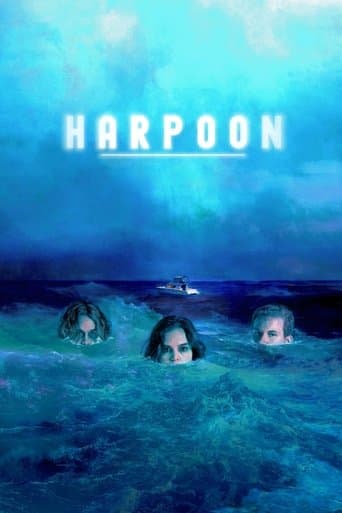
Harpoon
"Harpoon"
OverView
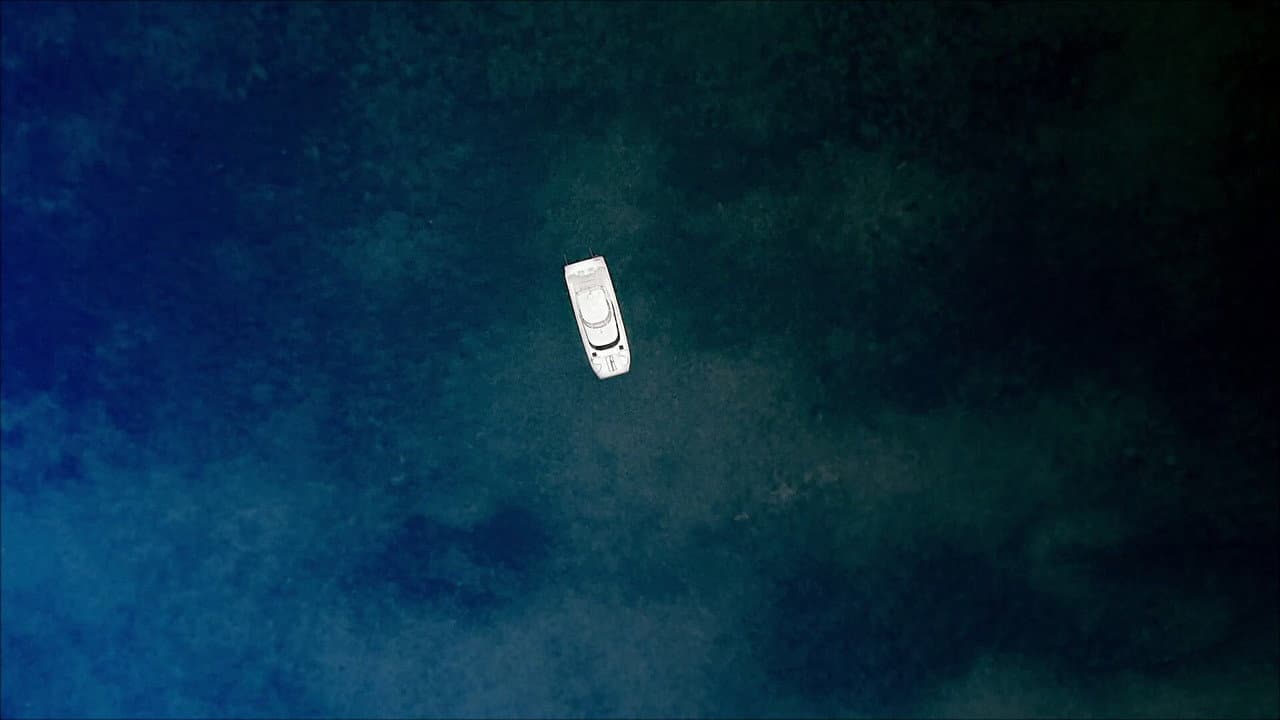
Rivalries, dark secrets, and sexual tension emerge when three best friends find themselves stranded on a yacht in the middle of the ocean under suspicious circumstances.
Harpoon Cast





Harpoon Reviews
JPRetana
June 1, 2026Harpoon (2019) is a yacht survival movie. This is a tricky thing to pull off. You want it to be character-driven, but you need it to be actor-driven. Would Dead Calm work without Sam Neill, Nicole Kidman, and Billy Zane? Would All Is Lost (the one-man variation) work without Robert Redford? On the basis of Harpoon, no. They would not. Then again, this film could star the Holy Trinity working for scale and it wouldn’t matter, because the script is narrator-driven, and the narrator isn’t even a character. He’s an omniscient snark machine — a Greek chorus for assholes. The narrator doesn’t serve the story; the story serves him. The voiceover begins before the film even does. Within the first five minutes, the movie literally freeze-frames twice while the narrator dumps exposition. Some of this clunky backstory concerns Richard (Christopher Gray), who is said to be “prone to fits of rage … one time [he] threw his laptop into his flat-screen TV all because he couldn’t remember the password to his own email account.” This is immediately followed by a scene where Christopher beats up Jonah (Munro Chambers) over misread text messages. That’s one of the film’s core problems: it announces what it should simply show, and it often announces things that it ends up showing anyway. It wants to be a comedy of errors, but it makes too many unintentional mistakes. Consider the intertitle that reads “Part 2 - Five Days and No Shipping Boats Later.” The joke is that there’s no Part 1. Fair enough. But the film can’t leave well enough alone — the narrator has to underline it: “As the chapter title so eloquently states, our trio had fallen on a stretch of bad luck.” Thanks for the recap. And then there’s the title. Harpoon hinges on a running joke in which Sasha (Emily Tyra) is corrected by the others: it’s not a harpoon; it’s a spear gun. The gag is quickly dropped, as if writer-director Rob Grant suddenly realized: “If I’m so smart, why didn’t I call the movie Spear Gun?” Incidentally, the spear gun is like Steven Seagal in Executive Decision. Once it serves its purpose, it’s unceremoniously written off in a moment of stupefying contrivance. But then, this screenplay is nothing if not contrived. What are the odds that, after five days without food and barely enough water for a Mexican shower, Richard will be accurate, strong, and lucky enough to hit a seagull midflight with a golf ball, kill it, and have it land right at his feet? Pretty good, if you need the seagull to lead to the next belabored plot point. The protagonists decide to drink the seagull’s blood for sustenance, which Sasha learned from Edgar Allan Poe’s The Narrative of Arthur Gordon Pym of Nantucket. “So let me get this straight,” Jonah interrupts her. “You’re getting your survival tips from the same guy who wrote about the spaghetti monster?” The only way this line makes any sense is if Jonah is confusing Poe with Lovecraft and Cthulhu with the Flying Spaghetti Monster. Even if that’s the joke and you get it, it’s too baroque to be funny. If the Poe reference stopped there it would effectively foreshadow the movie’s climax, but the script is too cool for subtext, so it ends up telegraphing it instead. Granted, there is sort of a grisly twist. However, it doesn’t work because it’s not a result of Ocean Madness. The character who does something crazy was already revealed to have been a “psycho” since long before they boarded the yacht. Harpoon is a pretentious, solipsistic exercise. It would rather amuse itself than challenge the audience. Grant fancies himself awfully clever, quoting Aristotle at the beginning, oblivious that true wit would be Aristotelian, not Aristotle-quoting.
Movie Recommendations
Especially Recommended For You